6 Days/ 5 Nights
$ 2000.00
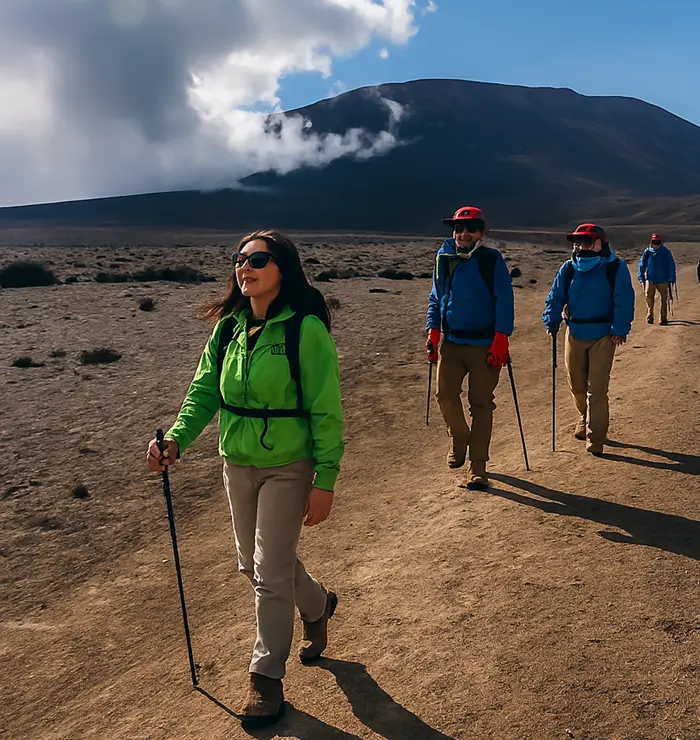
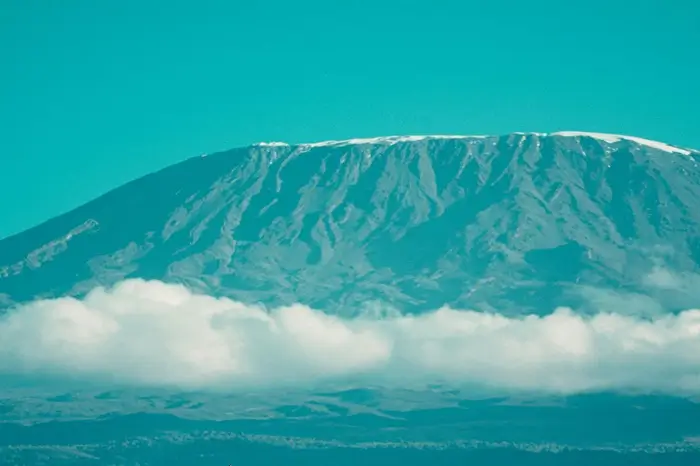
The Rongai route is the only path that approaches Mount Kilimanjaro from the north, near the Kenyan border. While it is becoming increasingly popular, it still sees fewer climbers compared to other routes. Rongai features a gentler incline than most of the mountain’s trails, making it an attractive option for those seeking an alternative to the crowded Marangu route, a more secluded hiking experience, or a climb during the rainy season (as the northern side receives less rainfall). This moderately challenging route is particularly suitable for climbers with limited backpacking experience.
Although Rongai’s scenery is less diverse than the western routes, it offers extensive stretches through pristine wilderness. The descent is typically made via the Marangu route.
Upon arrival at Kilimanjaro International Airport, you will be greeted and transferred to Salinero B&B for overnight accommodation. Your head guide will conduct a briefing, check your gear, and assist you in renting any equipment you may need.
Elevation: 1,997m / 6,552ft → 2,635m / 8,645ft
Ascent Gained: 638m
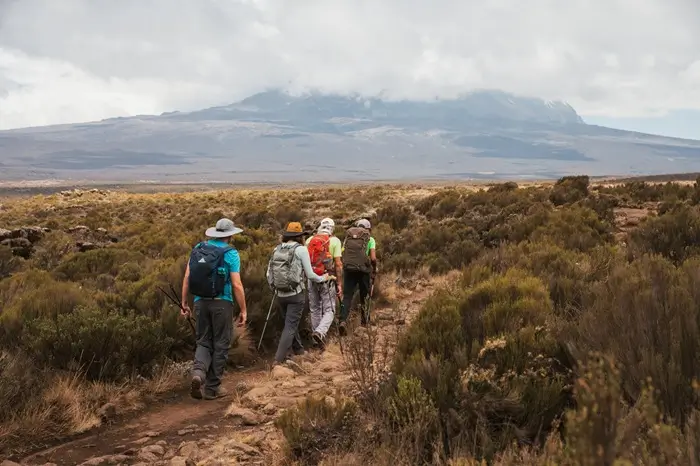
Leaving Moshi, a 4–5 hour drive passes through lush coffee estates and the village of Nale Muru before reaching the Kilimanjaro National Park Gate. While permits are being processed, you can observe the lively scene as various crews get ready to begin their climbs. The trek begins through scenic woodland and winding paths, where your guide shares insights about the local plants, animals, and wildlife you may encounter. Simba Camp is located near the first cave on the edge of the moorland zone, offering sweeping views across the Kenyan plains.
Elevation: 2635m / 8,645ft → 3487m / 11,440ft
Total Ascent: 852m
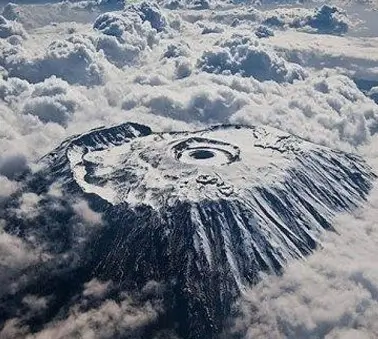
Following a restful night and a filling breakfast, the trail continues steadily upward through the moorland. Along the way, you’ll enjoy impressive views of Kibo and catch your first sight of the ice fields along the eastern crater rim. As you near Second Cave, the sparse moorland vegetation becomes even thinner. Expect the temperature to start dropping as you gain altitude.
Elevation: 2635m / 8,645ft → 3936m / 12,913ft
Total Elevation Gain: 449m
After finishing breakfast and getting packed, the trek continues with a gradual climb into semi-desert landscapes. This is a comparatively shorter hiking day that brings you nearer to the Eastern ice fields, which remain a stunning focal point along the way. Be mindful of how you’re feeling and notify your guide immediately if you notice any symptoms of altitude sickness.
Elevation: 3936m / 12,913ft → 5174m / 16,975ft
Altitude Gain: 1238m
Leaving the Third Cave early, you continue out of the semi-desert zone and spend the rest of the day trekking through the Alpine Desert. The trail leads you to the Kibo Huts, located just beneath the Kibo crater wall. Here, you will join the Marangu Route, which is the final path to the summit. Before turning in for the night around 7 PM, you will organize your gear and clothing, ensuring items like headlamp and camera batteries are refreshed, and then try to rest for a few hours before the summit push.
Elevation: 5174m / 16,975ft → 5895m / 19,341ft
Total Ascent: 721m
Then Descent to: 3721m / 12,208ft
Total Descent: 2174m
With excitement high, the summit push begins in the early hours — typically between midnight and 2 a.m. This final stretch is the most demanding part of the entire climb, both mentally and physically.
The trail leads between the Rebmann and Ratzel glaciers as we press upward, trying to conserve warmth and motivation for the achievement ahead. The path zigzags northwest over deep scree to reach Stella Point on the crater rim, where a breathtaking sunrise greets you during a short pause. Those who move quickly may even witness the sunrise from the summit itself. The final hour to Uhuru Peak usually involves trekking over snow.
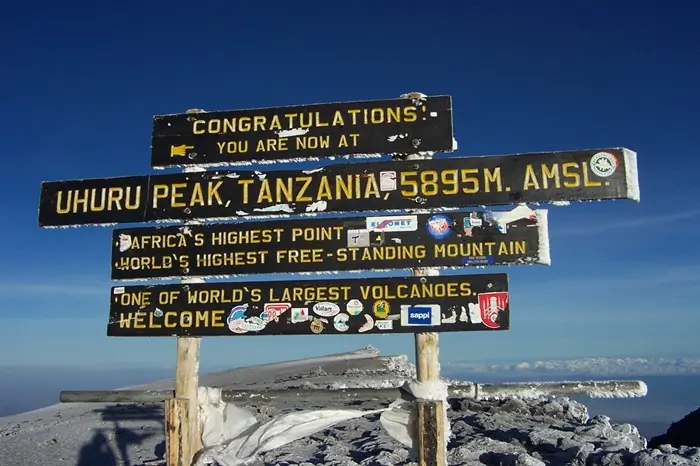
Step by step, you finally stand on Uhuru Peak — the highest point on Mount Kilimanjaro and the entire African continent. Congratulations!
After photos, celebration, and perhaps a few emotional moments, we begin the steep descent to Mweka Camp, pausing at Barafu for lunch and a brief break. Trekking poles and gaiters are highly recommended as the terrain consists of loose gravel and volcanic ash. A well-earned night of rest awaits at Mweka Camp — your last evening on the mountain.

Elevation: 3721m/12,208ft to 1905m/6250ft
Altitude lost: 1816m
After breakfast and a heartfelt ceremony of appreciation and team bonding with your crew it’s time to say goodbye. We continue the descent down stopping at the Mandara Huts for lunch. Remember to tip your guides, cooks, and porters, since you will be leaving them here. You return back to the Marangu Park Gate and receive your summit certificates. As the weather is drastically warmer, the terrain is wet, muddy and steep and we highly recommend Gaiters and trekking poles. From the gate, a vehicle will meet you to drive you back to your hotel in Moshi (about 45 minutes).
Pick-up and drop-off at Kilimanjaro International Airport
Transfer to the trailhead - entry gate to Kilimanjaro National Park
Pick-up at the exit from Kilimanjaro National Park and transfer to the hotel
All park fees collected by the Kilimanjaro National Park ( conservation fees, camping fees, crew fees, vehicle fee, rescue fee and all other fees collected by the Tanzania National Parks Authority).
One night at Salinero hotel before the expedition and one night after; The hotels have everything for your comfortable stay - caring staff, nice rooms, reliable Wi-Fi, restaurant); Tented accommodation on Mount Kilimanjaro (modern, comfortable 4-Season tents North Face VE-25 or Almighty Kilimanjaro Tents).
Breakfast in the hotel before and after the hike
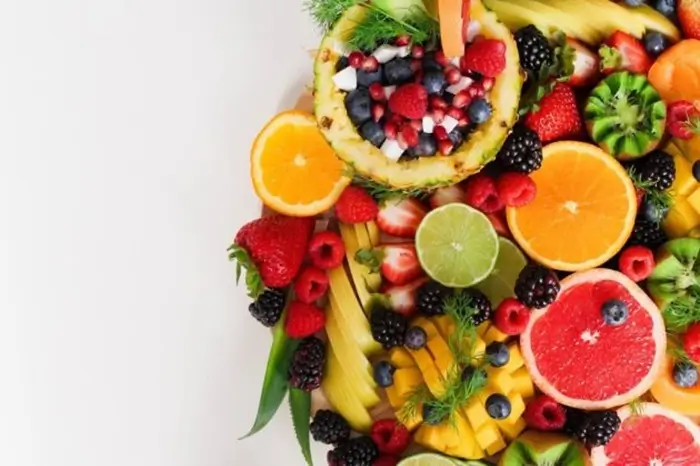
All meals on the hike. Our Kilimanjaro diet includes energy-rich and highly nutritious meals prepared by our professional high-altitude cooks. A typical diet on Kilimanjaro includes different soups, garnishes, several types of fish and meat, fresh fruit and vegetables; vegetarian/gluten-free/halal options are available at no extra cost; All drinks on the hike (coffee, tea, hot chocolate and water).
4-inch (10-cm) thick and comfortable sleeping mats
All group equipment (spacious and comfortable dining tent, camping table and chairs, crockery and cutlery)
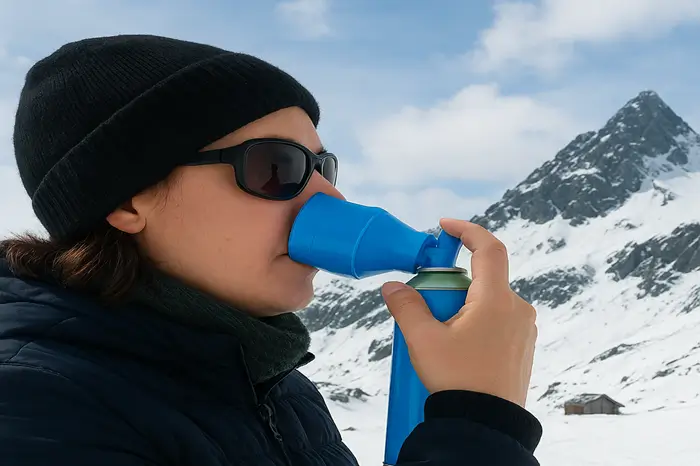
Oxygen cylinders and oximeters
GPS-tracking service
Complete medical kits
Professional guides, licensed by Kilimanjaro National Park. All our guides are the holder of Wilderness First Responder or Wilderness First Aid certifications. All our guides have 10+years of successful mountaineering experience.
Dedicated support crew (assistant guides, camp master, porters, cooks, etc.)
Airline tickets
Visa fee
Personal gear rentals
Tips for the mountain crew
Mountaineering insurance
The best time to climb Mount Kilimanjaro is during the two trekking seasons: January to March and June to October. These periods offer favorable conditions for a safe and enjoyable climb.
The percentage of oxygen in the atmosphere at sea level is about 21%. Before planning your Mount Kilimanjaro Trip, it is crucial to explore the cost of climbing Kilimanjaro.
For high-altitude treks like Kilimanjaro, proper nutrition is crucial for maintaining energy levels and ensuring a successful climb. You will need nutritious foods to gain proper energy.